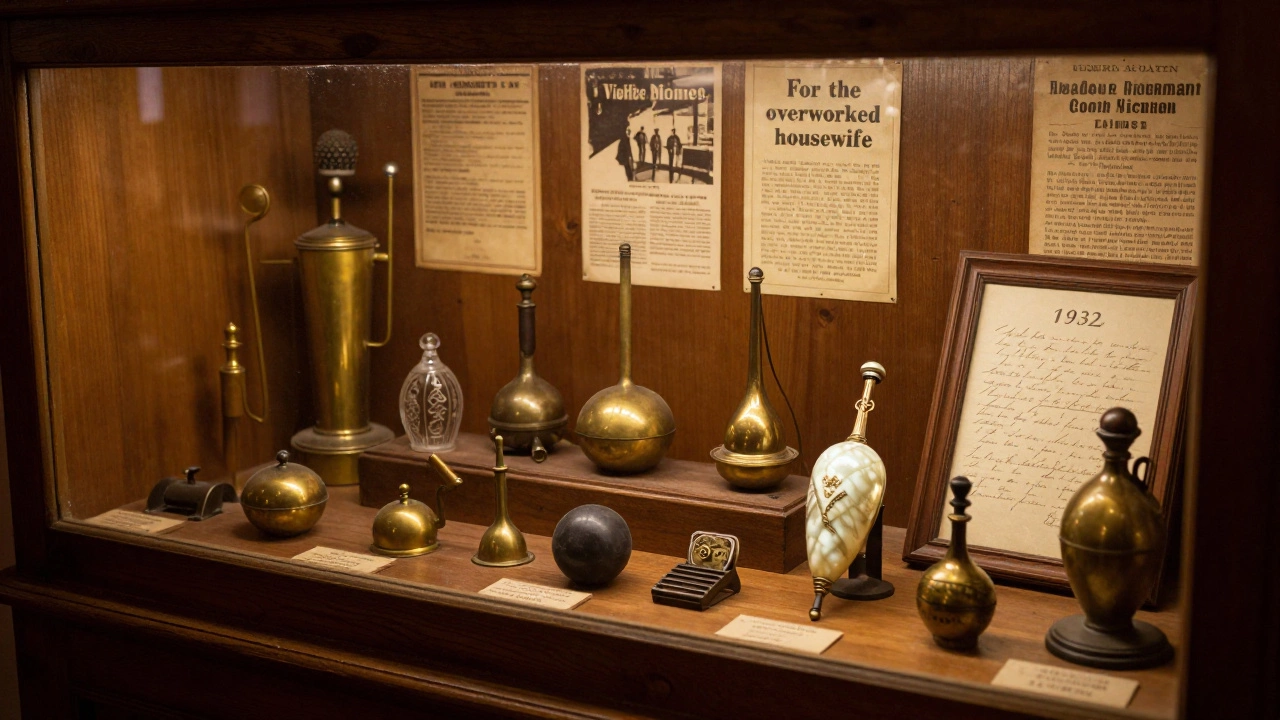
Most people think of Dubai as skyscrapers, desert safaris, and luxury shopping. But tucked away in a quiet corner of the city is a museum that turns heads, sparks curiosity, and makes you rethink what counts as history: the Antique Vibrator Museum. Yes, you read that right. It’s not a joke. It’s real. And it’s one of the most unexpectedly fascinating places you’ll ever visit. The collection spans over 100 years of intimate technology - from hand-cranked devices made of wood and brass to early electric models that look like something out of a steampunk novel. These weren’t just toys. They were medical devices, sold by doctors as treatments for "hysteria" - a diagnosis women were given for everything from mood swings to wanting too much independence.
Back in the 1800s, doctors used mechanical vibrators to induce "hysterical paroxysm" - what we now call orgasm - because they believed it relieved stress and nervous tension. Women would visit clinics, lie on a table, and wait while the doctor operated a bulky machine. Some of these devices were so heavy, they needed to be mounted on tables or walls. The museum has one from 1887 that still works, powered by a foot pedal. It’s quiet now, but you can almost hear the hum of a time when pleasure was treated like a clinical procedure. And if you’re looking for a more modern kind of relief in Dubai, you might check out iranian escort dubai services, though that’s a whole other kind of experience.
How It All Started
The museum was founded by a retired engineer named Farid Al-Mansoori, who collected these devices after his grandmother passed away and left him a small wooden vibrator she’d kept hidden under her bed. He didn’t know what it was at first - just that it was old, heavy, and oddly well-made. Curious, he started digging. What he found was a forgotten chapter of medical history. By 1900, over 100 companies in the U.S. and Europe were manufacturing vibrators. Some looked like toothbrushes. Others resembled small hand tools. One model even came with interchangeable attachments - a precursor to today’s modern sex toys.
By the 1920s, as electricity became common in homes, vibrators started appearing in catalogs alongside vacuum cleaners and electric mixers. Ads promised relief from "nerve fatigue" and "muscle stiffness." No mention of pleasure. No mention of sex. Just science. The museum has a 1924 ad from a Chicago company that says: "For the modern woman who demands efficiency and comfort."
The Technology Behind the Devices
The museum displays over 300 pieces, each with its own story. One of the most remarkable is the "Magnetico" from 1912 - a brass device that used electromagnets instead of a motor. It required no batteries or plugs. You just wound a spring, and it vibrated for five minutes. Another, the "Vibro-Sonic" from 1938, had a built-in timer. It shut off automatically after 10 minutes - likely to prevent overuse. These weren’t designed for fun. They were designed for precision.
Many of the devices were made by companies that also produced medical equipment. The same factories that made dental drills also made vibrators. The materials were medical-grade: nickel-plated brass, phenolic resin, and polished hardwood. Some even had leather straps to hold them in place. The museum curator says the most expensive item in the collection is a 1907 French model encrusted with mother-of-pearl. It was made for a wealthy aristocrat who reportedly used it daily.
Why It Matters Today
What makes this museum powerful isn’t just the gadgets. It’s the story they tell about how society treated women’s bodies. For decades, female sexuality was pathologized. Pleasure was hidden. Women were told their needs were medical problems, not natural desires. The vibrator was a tool of control disguised as care. Today, we’re seeing a shift. Sex toys are openly sold in pharmacies. Brands like LELO and Dame are marketed like skincare products. But this museum reminds us how far we’ve come - and how recently we were told to be ashamed.
Visitors often leave with a new perspective. A 72-year-old woman from Sweden once told the curator, "I didn’t know my mother might have used one of these. I thought she was just tired." Another visitor, a 28-year-old nurse from Australia, said, "I used to think these were just novelty items. Now I see them as symbols of resistance."

What You’ll See Inside
The museum is small - just two rooms - but packed with detail. The first room is dedicated to 19th-century devices: hand-cranked, spring-powered, and battery-operated models from Germany, France, and the U.S. The second room shows the evolution into the 20th century, with early electric models, promotional posters, and even a 1950s-era instruction manual titled "How to Use Your Vibrator Safely at Home."
There’s also a wall of original advertisements. One from 1915 reads: "For the overworked housewife - restore your vitality with the gentle touch of modern science." Another, from 1947, shows a woman in a 1940s dress holding a device shaped like a hairdryer. The caption: "Your personal physician in the comfort of your home."
One of the most touching exhibits is a handwritten letter from a woman in 1932, addressed to a doctor in Boston. She wrote: "I don’t know what you call it, but it helps me sleep. Thank you for not judging me." The museum has a copy of it on display, under glass.
Visiting the Museum
The museum is located in the Al Fahidi Historical District, near the Dubai Creek. It’s open Tuesday through Sunday, from 10 a.m. to 6 p.m. Entry is free, but donations are encouraged. No photos are allowed of the more sensitive items - a rule meant to preserve dignity, not secrecy. Guided tours last about 45 minutes and are offered in English, Arabic, and French. The staff are knowledgeable and respectful. They don’t laugh. They don’t blush. They treat these objects like the historical artifacts they are.
There’s a small gift shop selling reproductions of vintage vibrators - but only as decorative pieces. One model, a 1920s-style brass device, is sold as a "desk accessory." It doesn’t vibrate. It’s purely aesthetic. Still, people buy it. Some say it’s a conversation starter. Others say it’s a reminder.
A Different Kind of Therapy
Some visitors come looking for something else - not history, but escape. Dubai has a reputation for luxury, but also for isolation. People travel here for work, for wealth, for adventure. But sometimes, they’re just lonely. A few years ago, a man from London came to the museum and spent two hours silently looking at a 1910 model. He didn’t say much. But when he left, he bought the book the museum publishes - "The Quiet Revolution: How Vibrators Changed Women’s Lives." He wrote in the guestbook: "I didn’t know I needed this until I saw it."
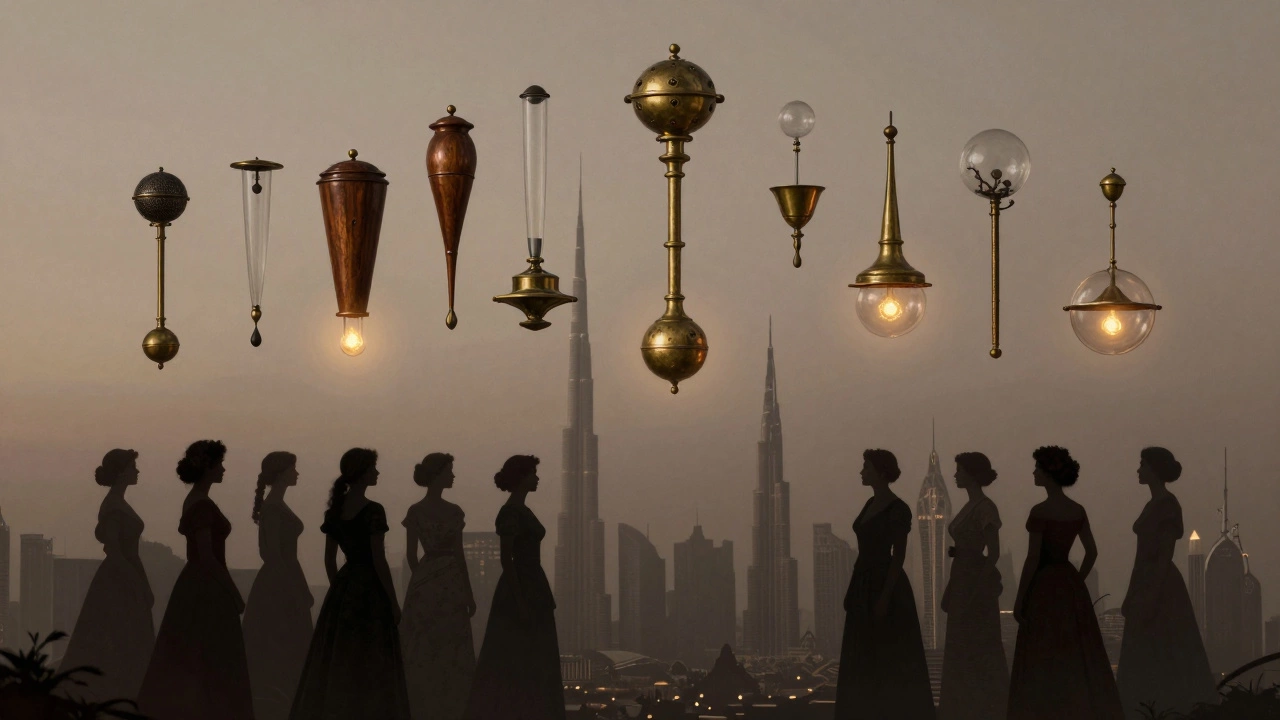
If you’re in Dubai and want to understand the city beyond the gold souks and the Burj Khalifa, this museum offers something rare: a quiet, thoughtful look at how people have always sought comfort, connection, and control over their own bodies. It’s not flashy. It’s not loud. But it’s honest.
And if you’re looking for a different kind of companionship while you’re here, you might consider dubai cheap escort options - though the museum doesn’t endorse or recommend any services.
Myths and Misconceptions
Many assume the museum is a gimmick. It’s not. It’s been featured in academic journals on medical history and has been visited by researchers from Harvard, Oxford, and the University of Toronto. The curator, Farid, has published three peer-reviewed papers on the topic. One of them, "The Medicalization of Female Pleasure in the Industrial Age," was cited in a 2023 study on gender and technology.
Another myth is that these devices were only used by women. They weren’t. Men used them too - for back pain, muscle spasms, even prostate issues. The museum has a 1922 catalog from a U.S. medical supplier that lists vibrators for "male nervous disorders." The same model, sold to both genders, with different instructions.
What Comes Next
The museum is planning a new exhibit on the global history of intimacy devices - including ones from Japan, India, and Iran. There’s a 1960s Iranian vibrator made of ceramic, with hand-painted floral patterns. It’s rare. Only three are known to exist. The museum hopes to acquire it next year.
As for the original collection? It’s growing. New items arrive every month - donated by families who found them in attics, drawers, or hidden behind old books. Each one comes with a story. Sometimes, it’s just a name and a date. Sometimes, it’s a whole life.
And if you’re wondering whether any of these old devices still work? Most do. The museum keeps them in working condition - not to use, but to honor. Because the real miracle isn’t the technology. It’s that people kept using them, even when no one was supposed to talk about it.
There’s a quiet power in that.
And if you’re in Dubai and need a different kind of touch, you might look into dubai massage escort - but the museum doesn’t connect you with anyone. That’s not its purpose.
Author
Maverick Leclair
Hi, I'm Maverick Leclair, a sports enthusiast with a passion for motorsports. I've spent years honing my expertise in various sporting disciplines, but my true love lies in the adrenaline-pumping world of racing. As a writer, I enjoy sharing my insights and experiences with fellow fans of high-speed pursuits. From Formula 1 to MotoGP, I've got you covered with the latest news, analysis, and in-depth features. Join me as we explore the fascinating world of motorsports together.